The Visual Communication has found in motorsport a critical catalyst for material innovation and process optimization. What historically began as an identification by national colors has evolved into a complex ecosystem where the Aerodynamics, global sponsorship and Polymer Science. For the professional in the sector, understanding the demands of the Competition Lettering not only does it open up a high-value niche market, but it provides the necessary tools to transform a common vehicle into a high-value advertising tool. High impact and durability guaranteed.
Regulatory framework and its impact on technical design
Creative freedom in the Competition Lettering It is strictly delimited by regulatory frameworks that vary according to the category. In the Formula 1, the fight for the stopwatch has led to the reduction of paint to expose the Carbon fiber, saving between 1 kg and 2 kg weight. From 2026, the regulations stipulate that a minimum of 55% of the surface area of the vehicle must be covered by paint or vinyls to protect the visual identity of the sport. This requires the use of Ultra-thin films (between 38 and 50 microns) that offer high opacity with minimal weight. In Spain, the RFEDA It sets precise criteria for rallies, where the rally plate should measure 43cm X 21.5cm and the bibs must be colored Fluorescent orange or yellow with a height of 16 cm. Failure to comply with these rules, such as simultaneously omitting the license plate and numbers, entails the Exclusion from the Evidence
Vinyl technology for extreme racing lettering
The selection of the substrate is the determining factor for the success of a Competition Lettering subjected to extreme conditions, being the Cast films (cast) The only ones suitable for surfaces with complex curves. The professional sector uses advanced technologies such as the 3M Controltac, which allows sliding before applying pressure, or technology Easy Apply RS by Avery Dennison, which reduces installation times in the pits. For its part, Arlon stands out with its FLITE Technology low initial adhesion, ideal for large panels, while Hexis specializes in bold textures such as carbon or chrome plated. In critical areas, such as Brake calipers, reflective materials are used that support up to 232ºC. In addition, in disciplines such as rallying, the design is protected with Polyurethane Sheets (PPF) 6 to 10 mil thick to resist gravel impacts and natural wear and tear on the tracks.
Sponsorship hierarchy in vehicle wrapping
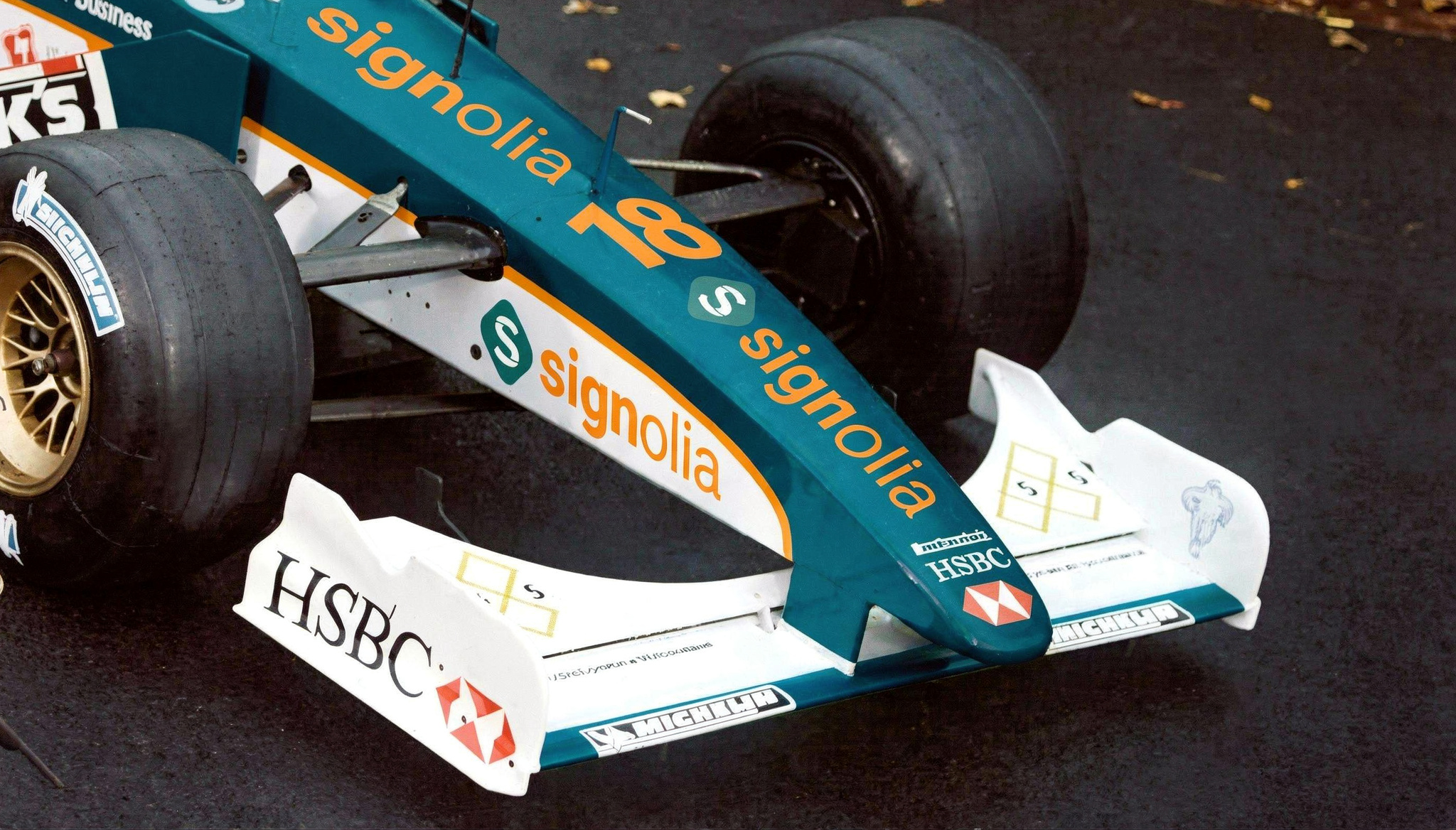
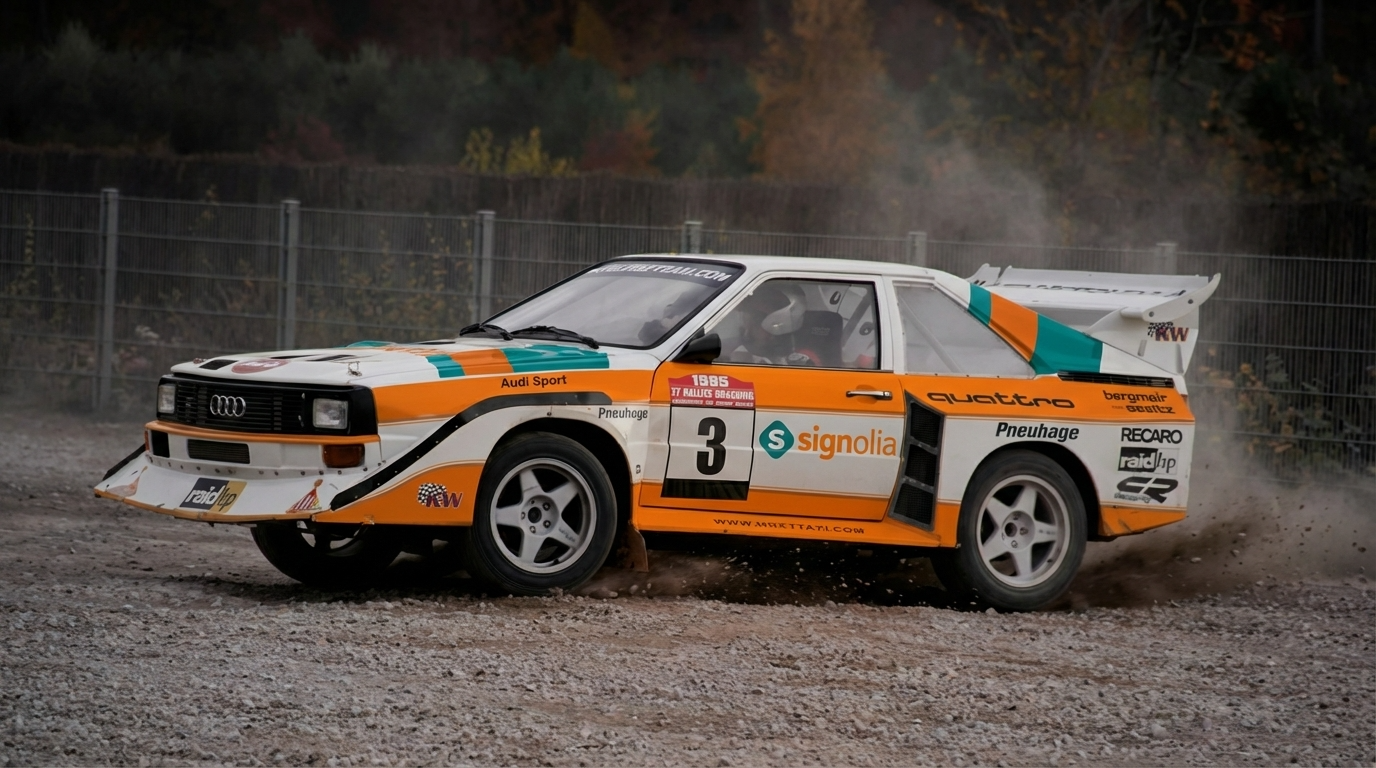
Design in the Competition Lettering It's a piece of brand engineering that must communicate speed and professionalism while satisfying multiple sponsors. Since a vehicle on the track is perceived at speeds higher than 160km/h, the use of High tonal contrast (such as fluorescent yellow on black) to ensure readability on TV. The Flow lines They must follow the aerodynamics of the vehicle to create an illusion of movement, avoiding intricate textures that smudge when moving. Brand architecture positions the Main Sponsor on the bonnet, rear spoiler and sidepods to maximise the Media exposure. It is essential that this identity is consistent across all touchpoints, from car to truck, raising the perception of professionalism and facilitating the Attracting new sponsorships.
Production processes and professional installation techniques
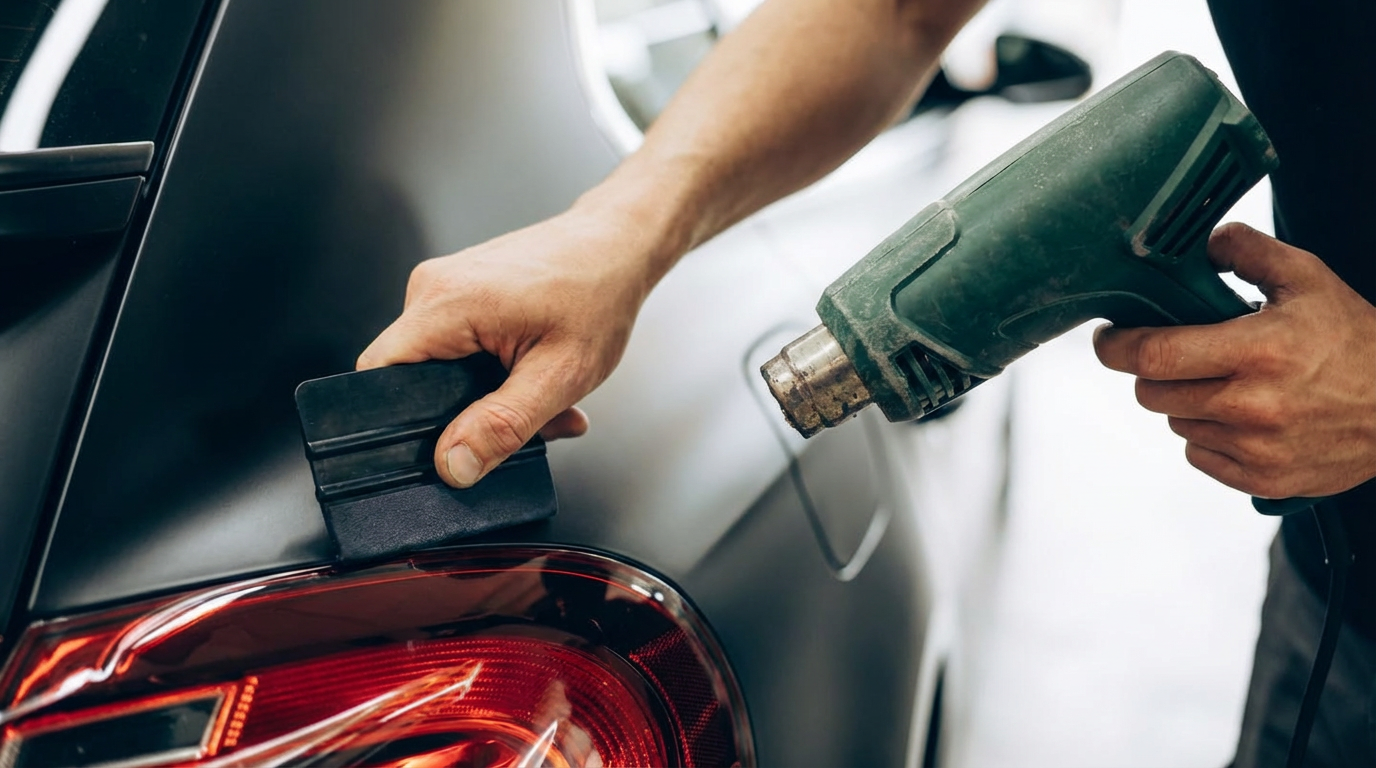
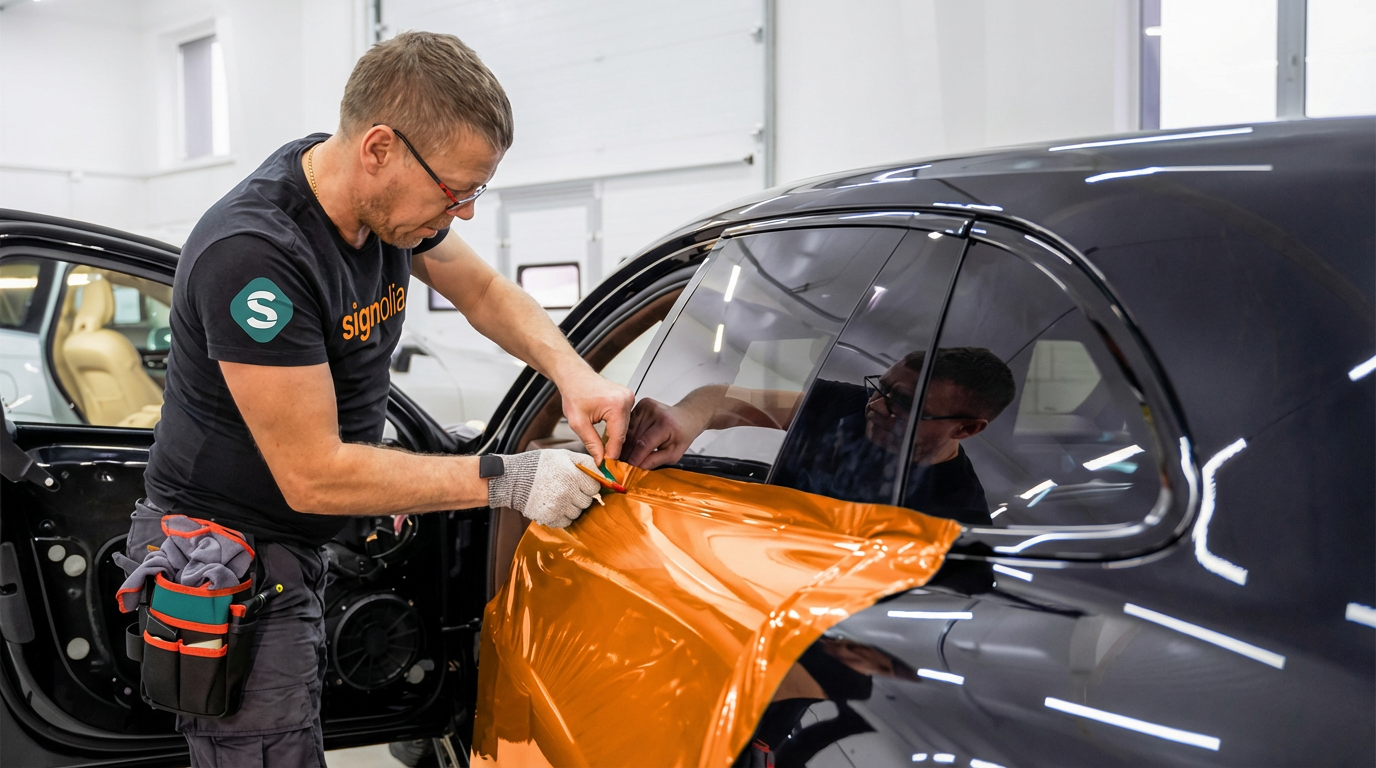
The Competition Lettering requires a more rigorous installation protocol than commercial due to thermal and aerodynamic forces. The process of Professional cleaning It consists of three stages: initial degreasing, treatment with Clay Bar to remove embedded impurities and final conditioning with 70% isopropyl alcohol. A key advanced technique is the "Scale effect", where the vinyl is applied from the back to the front so that the Overlap is downwind, preventing high-velocity air from lifting the material. The use of Knifeless Tape to prevent damage to the carbon fiber and perform a Post-heating controlled between 85ºC and 5ºC in areas where the material has been stretched, ensuring that it does not recover its original shape and rises.
Business Insight: Business Models and Profitability
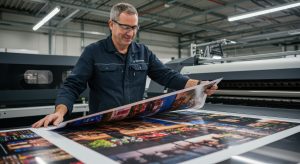
For a digital printing workshop, specialization in the Competition Lettering Delivers higher profit margins than standard fleet wrapping. In the Spanish market, the Integral signage of a rally car ranges from €800 and €3,500, depending on the complexity and special materials used. The service of Exclusive livery design It is billed separately, with rates starting from €90 to over 600 € for comprehensive creative concepts with 3D visualization. A competitive advantage is the "Season Contract", which ensures recurrence through corrective maintenance in less than 24 hours and subscription services including service truck maintenance. These workshops act as Strategic Partners of the team, even helping in the creation of the visual dossier for fundraising.
Design ecosystem: 3D preview and AI
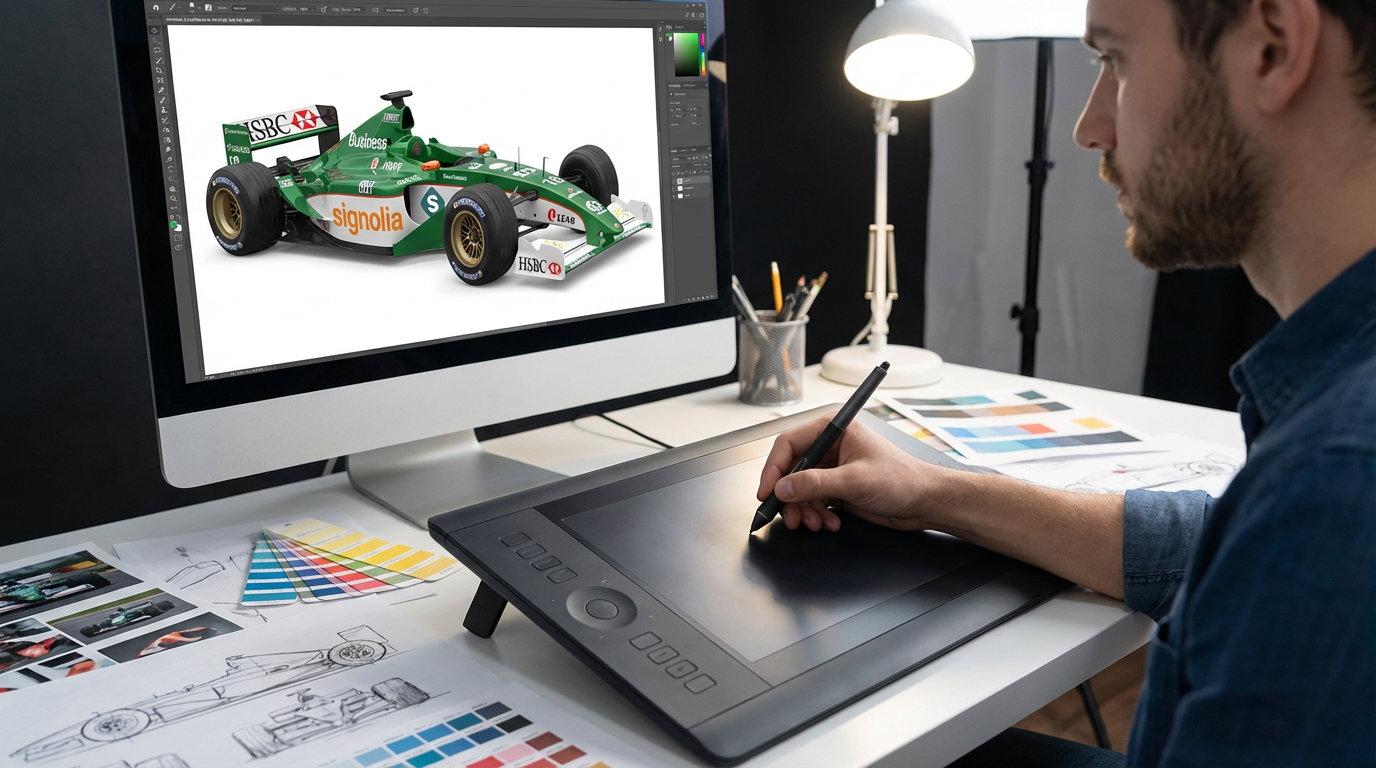
Advanced software integration such as EasySIGN Pro allows you to work on scale schemes and maximize the use of the material through the Nesting. The use of Adobe Substance 3D and Unreal Engine Facilitates hyper-realistic renderings for the sponsor to approve the design before physical production. Once installed, the maintenance of the Competition Lettering It is vital: a Curing 24 to 48 hours and always carry out a Manual washing with pH neutral shampoos. To remove tire residues (rubber) it should be used diluted isopropanol, always avoiding metal scrapers or aggressive products such as acetone that would damage the protective laminate. Complete drying after washing is essential to avoid limescale stains and preserve the Aesthetic quality throughout the season
Racing Car Wrap Design in Creative Studio (AI-Generated Image)
Conclusion
The transfer of knowledge from the Competition Lettering towards the commercial sector represents a strategic opportunity to increase the competitiveness of graphic companies. The techniques of Extreme preparation, the management of the Aerodynamics and the use of highly formable materials ensure that any commercial fleet gets superior service life and a professional image. Investment in certified training, mastery of tools 3D digital and the implementation of maintenance contracts are the pillars to transform a conventional workshop into a maintenance center. High-performance customization.
Passionate about marketing and communication, he helped to enhance Signolia's presence on social networks, blogs and user acquisition, contributing to its growth with constant content on the signage and visual communication sector at the point of sale.