
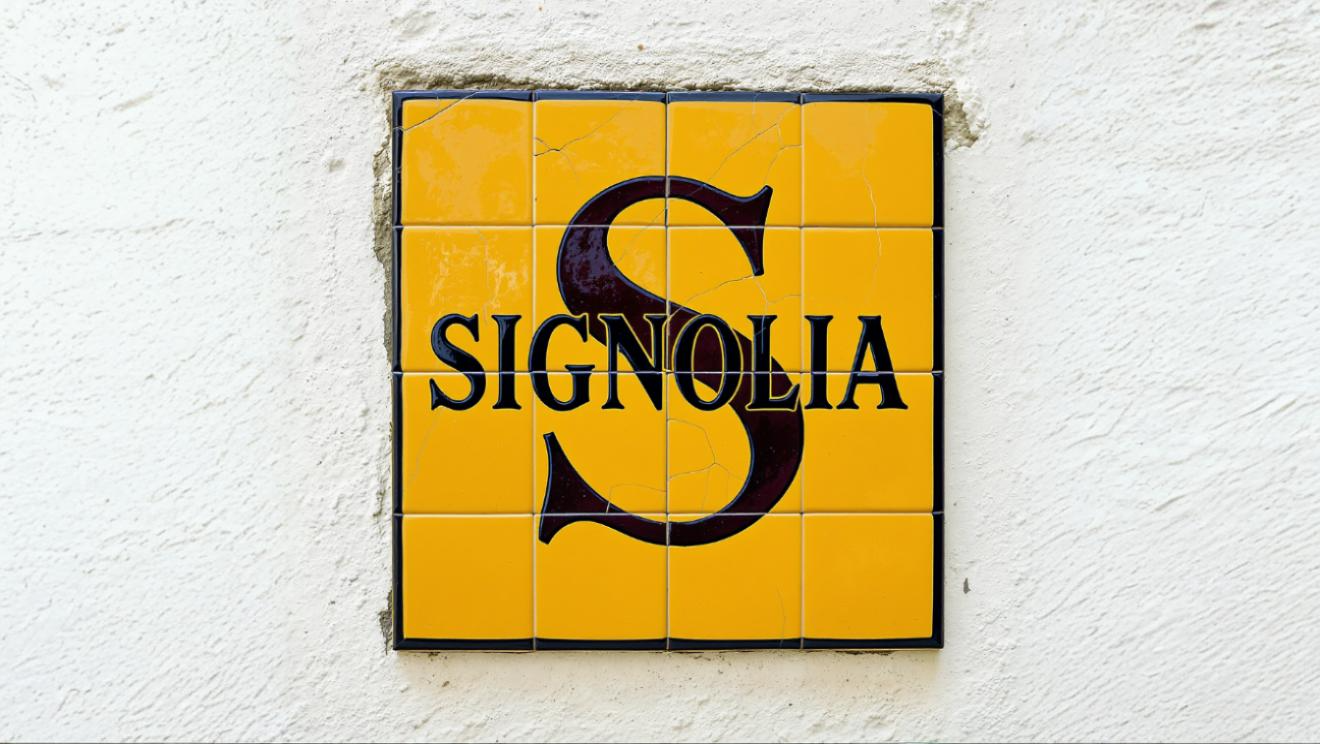
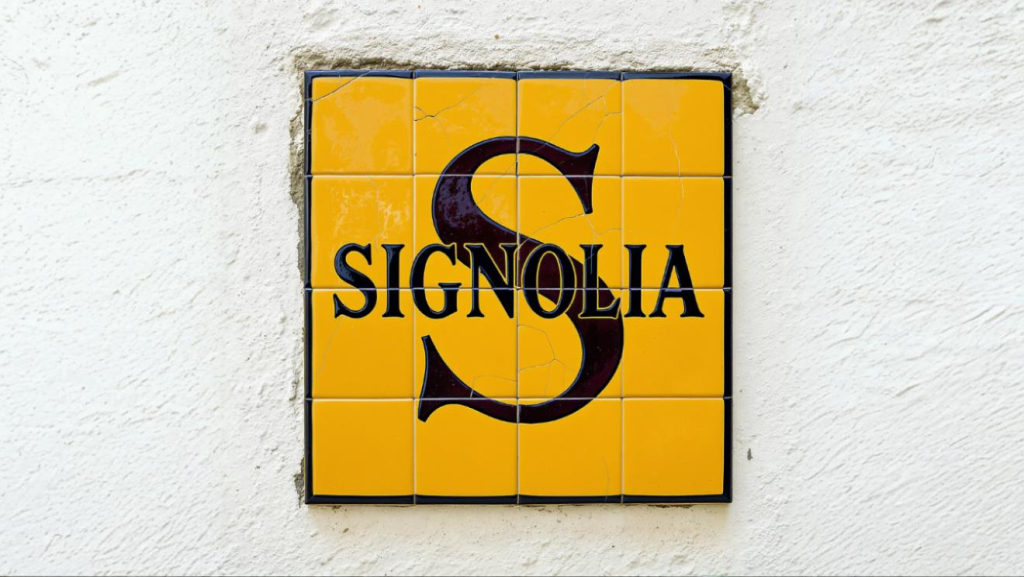
The sign is a A key piece within the image of a business and also within the general image of a city. Its function has always been clear: to attract the attention of people who pass by. For centuries, merchants have used signs to say Who they are and what they sell . In times when many people could not read, drawings, symbols or images that represented the trade or product were used. As reading spread, texts, business names, and written messages began to appear.
The signs were not only used to identify a place, but also to identify convey an idea of quality , style or type of customer. The colors, letters, and symbols helped to quickly understand whether it was an expensive store, a family business, a popular bar, or a specialty store.
Many of these signs were created by Small craftsmen and sign makers who worked with total freedom, worked in a practical way, using their experience and creativity to survive in their trade.
Over time, these signs have become a An important part of the history of the neighborhoods . They have seen generations pass, changes in customs and transformations in commerce. Today, when we see an old one, we understand better what life was like in that area and what kind of businesses there were.
In recent years, there has been a growing interest in understanding labels as More than just decoration . They are beginning to be seen as cultural elements with their own value, just like an old façade or a historic market. That is why there is more and more talk of Graphic Heritage, a way of naming all that urban graphics that identify a place and its neighbors. They are elements that help to to preserve the identity of the neighborhoods and to remember what the city was like before it looked so much like the others.
In many cities a very similar situation is repeated. Traditional shops end up closing and are replaced by franchises or big brands that use the same image in all cities. This makes it possible for streets that were previously different now look the same , with the same colors, the same signs...
One of the main reasons is the price of rents. In many areas, especially in historic centres, premises have become so expensive that small traders cannot support themselves. When the business closes, many times The sign is not preserved and disappears next to the premises.
Another problem is the change of use of many spaces. Premises that were previously shops become homes, tourist flats or spaces for temporary use. In these transformations, everything related to the previous business is almost always eliminated, including the sign, even if it has been part of the street for decades.
The consumption habits. More and more people are buying online and less in physical stores. Many small businesses have not been able to adapt to this change, while large companies have found online sales to be a clear advantage. This has made it more difficult for traditional commerce to survive.
Added to all this is the impact that the pandemic had. For months, many businesses had to close or work with great limitations. Many did not manage to recover and ended up lowering the shutters definitively. In this process, The signs were seen as worthless and not as part of the neighborhood's legacy.
The problem is that, while all this is happening, there is almost never a prior registration . The sign is not photographed, its history is not kept and the business it represented is not recorded. Thus, little by little, parts of the visual identity of cities are erased without it being barely noticeable until it is too late.
The Internet has completely changed the way in which we Keeps the memory of the labels . Before, this type of information was only collected in books, university studies or cultural archives. Today anyone can photograph a sign with their mobile phone and share it in seconds. In recent years there has been a Very strong increase in publications on urban commercial signs . This interest has not arisen by chance, but thanks to the role played by social networks and various personal and collective projects that have focused on this type of heritage.
Since the end of the nineties, with the expansion of the internet, they began to appear The first web pages dedicated to collecting images of old signs . A clear example was the project Zaragozadeluxe.com, begun in 1999, which documented elements of the sixties and seventies that were disappearing due to urban reforms, both in facades and in old shops. Over time, the way we use the Internet has changed, but much of that information is still available on websites and blogs that have maintained or replicated that content. This has allowed many signs that no longer physically exist to continue to be seen today.
From then on, hundreds of accounts specialized in urban signs began to appear. People from different cities began to photograph what they saw in their neighborhood and share it with other users interested in the same thing. Without intending to, they created a huge visual library of shops and urban graphics in Spain. A key moment was the year 2020. On the one hand, the Iberian Network in Defence of Graphic Heritage , that united many of these projects.
This helped more people discovered this type of heritage and began to value it . An active community was created that not only consumes content, but also generates, comments and shares it. In this exchange, a network of people united by the common interest in preserving the graphic memory of cities has been formed.
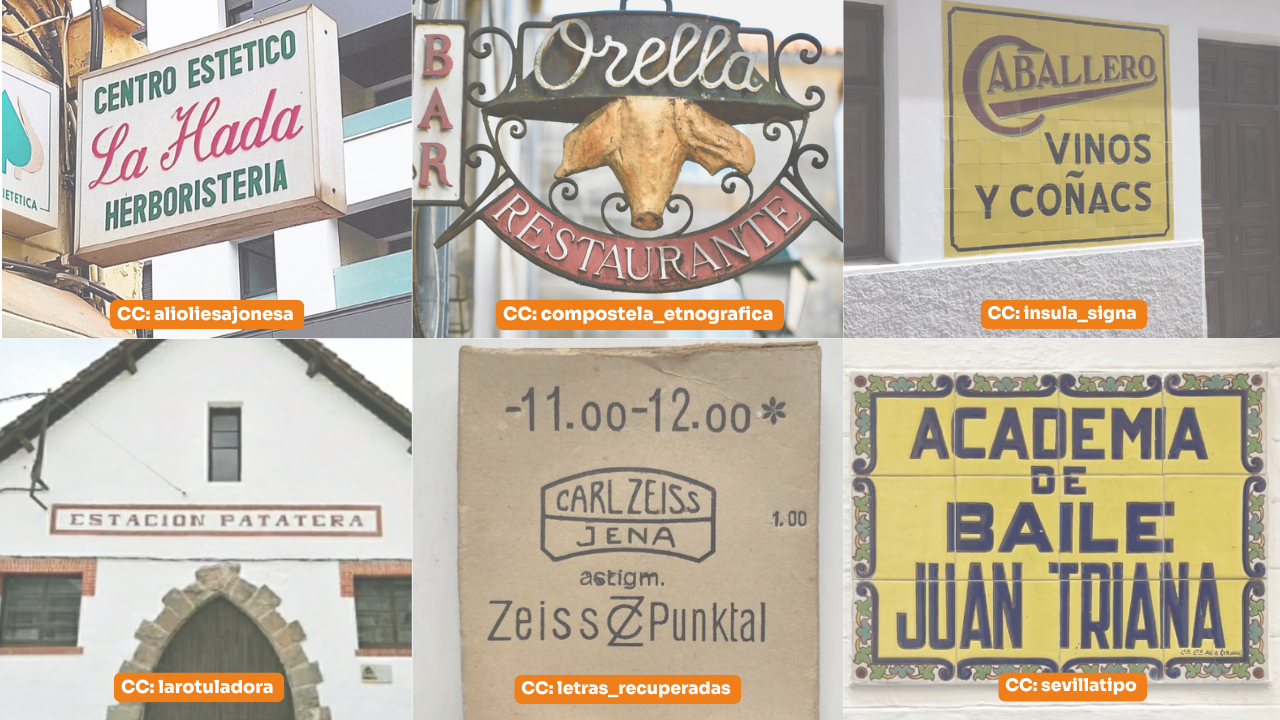
The most interesting thing about this movement is that it did not start in offices or institutions. It started on the street. People who looked at their city with different eyes and decided to start photographing, saving and telling the story of the signs before they disappeared. Each project is born from a specific city, with its neighbourhoods, its shops and its own way of signing. And although each one works in their own way, they all share the same idea: that signs are not simple posters, they are part of the culture of each place.
In Malaga Works Alioli is Jonesian , a project started in 2016 by two graphic designers, Roberto Espartero and Juan Martín who began to tour the city organizing walks to discover letters, old signs and forgotten styles. In addition to documenting, they have created products and participated in events related to design and typography.
In Santiago de Compostela is Compostela (ethno)graphic , a project led by a university researcher Aldrada Cidás which focuses especially on the signs of the historic center. Here not only signs are photographed, but also their relationship with the neighborhood and the neighbors is studied. It has even been presented in cultural spaces as important as the Reina Sofía Museum, without losing its roots of local work.
In Lion Highlights Capital E , created by two teachers who not only collect signs from the city, but also from small towns in the province, Txema Ramos and Javier Ordás. They have documented hundreds of signs and have also rescued some when they were about to disappear. They even made a small documentary about a local sign company.
In Canary Islands Is Insula Signa , an association created by Jaime Media, a sign-maker who started photographing signs and ended up organizing a very active collective. Not only do they document, they have also written a manifesto to defend the Canarian graphic heritage.
In Madrid There are several very active projects. Juanjo López He works as a letterer and typographer, and has created digital fonts from real letters in the city. Paco Graco It is a group that has not stopped at photographing. They have rescued more than two hundred signs and keep them in a warehouse, in addition to organizing exhibitions and cultural interventions throughout the city. Backwards , for its part, has created one of the largest communities on networks with thousands of images of signs in Madrid and other cities.
In Navarre is The Label Maker , a project by Oskar Brako Ozkoidi that has documented thousands of signs and has gone from publishing photos on social networks to rescuing physical signs, restoring them and even collaborating with public institutions. He has also published a book on disappeared signs in Pamplona.
In Cáceres Works Lyrics with History , a very special project because it was born within a high school. Teachers and students began to study the signs as a way to learn local history and to look at their city in a different way.
In Valence Works Recovered Letters , an archive created by Juan Nava, a veteran designer who for years has drawn letters from real signs and collected them in books and exhibitions. Thanks to this project, an important part of the traditional typography of many cities is preserved.
In Jaén Exists Chuleric Signs , which doesn't just post photos. They investigate the social context of each label, have published books, organized exhibitions and have even created entire alphabets from old labels. The person in charge is Carlos Campos.
And in Cantabria Highlights Santatipo , created in 2014 by Federico Barrera (who, thanks to him, we have been able to prepare this article due to his TFM "Signs and urban commercial graphics: protection and preservation of graphic heritage". The project began by documenting signs from a typographic and historical point of view through social networks and a blog. Over time it has grown and has become a benchmark for many other projects.
In Seville Works Sevillatipo , created in 2018 by designer Ricardo Barquín Molero to document commercial signs, signage and tilework. In 2024 he organised an exhibition that brought together real signs in a cultural space as part of Seville's Design Week, inviting us to reflect on how typography and aesthetics affect the city's image. As a result of this exhibition, a book was also published that collects the work carried out.
In Valence is Types that matter , a project started in 2020 by designer Miguel Maestro. In addition to documenting signs, he invites anyone to collaborate by sending images of the city. This work led to an exhibition and a documentary that tells the story of artisanal sign makers, those who painted letters by hand before digital printing. The documentary was selected at an international festival.
In Valladolid Works Valladolid with character , this project started in 2017 with Laura Asensio with a very complete approach. Not only do they document signs, they also research, publish and experiment with urban typography. They have created a huge digital archive with signs of the city and organized an exhibition at the Patio Herreriano Museum. In addition, they have already published two books that collect the graphic evolution of Valladolid and its province.
In Zamora Exists Zamora Graphic Heritage , born in 2022 and led by Javier García, a high school teacher. In a short time he has created a very active community and has participated in real rescues of signs. They also maintain a blog where they compile not only signs, but also cultural history of the city and the province.
From 2020 onwards, many of the people who had been working independently for years decided to to take it a step further. Until then, each project acted locally, focused on its city or community. But they all faced the same problems and had the same goals. Getting to know each other and working together was the natural next step.
This is how the Iberian Network of Graphic Heritage was born. Not as a big institution, but as a network of people who share a similar concern and way of working. Through this common space began to exchange information , experiences, tricks to better document, tips for rescuing signs and solutions to restore them.
Thanks to the Network, small projects gained visibility. What was previously limited to one neighborhood or one city began to be known in other parts of the country. Also created were Collaborations Between projects, meetings are organized and exhibitions, books and activities began to be shared. The Network has also served to develop a more organized way of working. Criteria have been created on how to document the signs, how to catalog them, how to store them correctly or how to tell their story to the public. It is not only about saving objects, but about explain why they are important.
In addition, many of these initiatives have begun to collaborate with Cultural institutions , museums, universities and the media. This has allowed graphic heritage to reach more people and to begin to be taken seriously as a cultural element with real value.
Another important part of the work is the communication . The Internet not only protects signs, it also explains what it does. Use social media, exhibitions, talks, and posts so that anyone can understand why These pieces are worth keeping.
What started as Personal Profiles on social networks it has gradually become an organized cultural movement. A movement made from below, from the neighborhoods, and that today has more and more weight.
This article has been prepared based on the Master's Thesis of Federico Barrera , where the Value of commercial signs as part of the graphic heritage of cities and numerous initiatives that are actively working on its conservation are compiled.
Their work has served as the main basis for understanding the real scope of the movement, better understanding how these city-by-city projects have emerged, and putting the Cultural Significance of the signs beyond the visual.
The information presented here has been adapted and summarized to make it more accessible and informative, but the substance of the content, the examples and the approach are based directly on his research.
From here, Thanks for a job so necessary to take care of the visual memory of our cities.
Signs are part of the history of cities, although we often do not see them as something important. However, when they disappear, we notice that Something has changed on the street.
Thanks to the Internet and to all these people who have decided to document what others thought they had lost, today We know better what our neighborhoods were like just a few decades ago. And thanks to the Network, these initiatives no longer walk alone.
Keeping the signs is not a matter of nostalgia. It is a way of Caring for the identity of cities , to keep their stories alive and to prevent all the streets from ending up looking alike.
Cities are not only built with buildings. They are also built with letters, colors, and names that tell who we are and where we come from.