

For years, signage has been seen as a purely physical process, focused on the fabrication and installation of visual elements. Today, however, that concept has evolved. The Signage technology It has turned the way these projects are designed, managed, and presented on its head, offering tools that turn each phase of the process into a more seamless, controlled, and professional experience.
The customer is no longer a passive spectator waiting for an end result. Thanks to innovations such as the augmented reality the artificial intelligence the centralized management systems (Brand Center) the Operational apps or the 3D Prototyping , the customer is actively involved, understands the value of each decision better and, above all, trusts the result more. This new approach not only improves execution, but also strengthens the bond between brand and user.
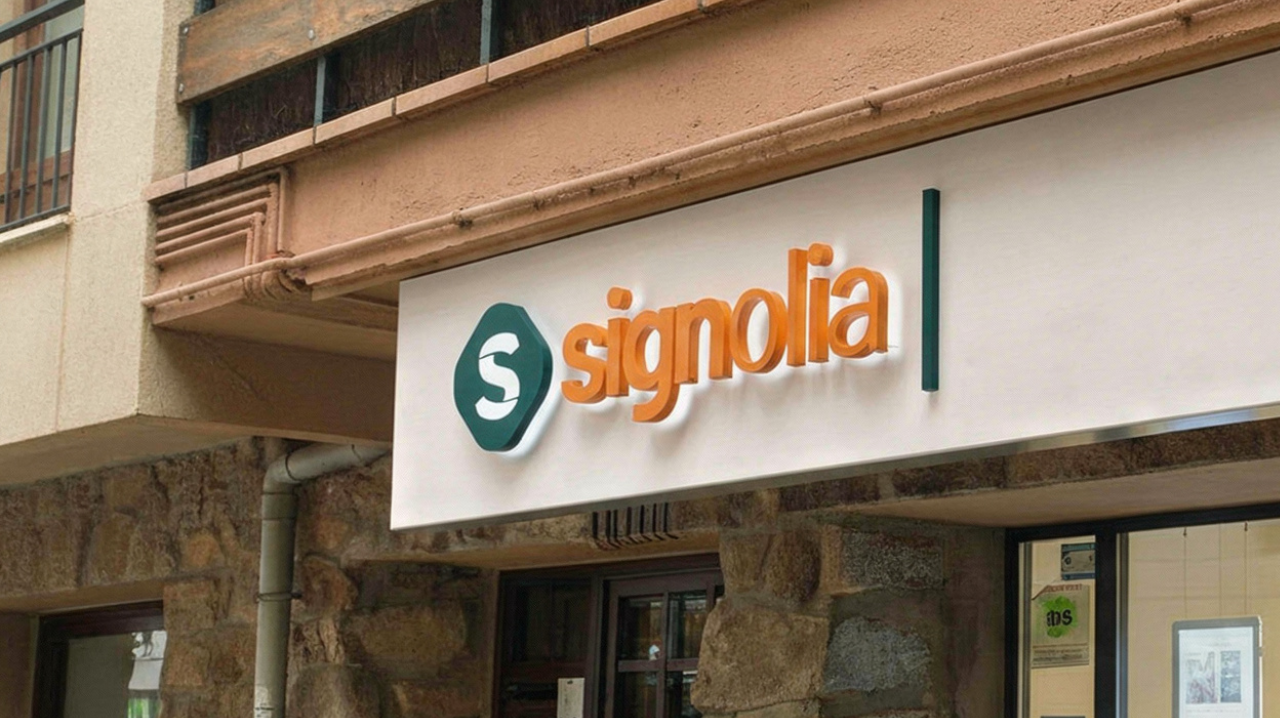
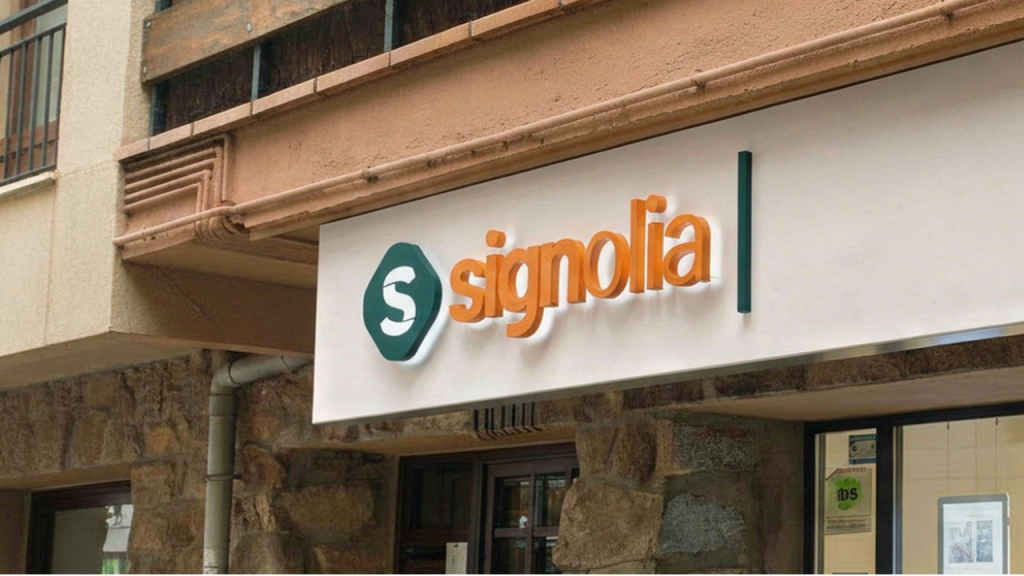
The Augmented reality (AR) applied to signage has revolutionized the most delicate moment of the process: the decision prior to manufacturing. How will the sign really look on my façade? Will it fit in with the environment? Will it be visible from the street? These questions, previously answered with sketches or flat renderings, are now resolved Seeing the result in real time from your mobile phone .
Using an AR viewer, the customer can project the final sign on their façade, at full scale, and from different angles. This Increases security in decision-making , eliminates misinterpretation, and speeds up proposal validation.
From an emotional point of view, this technology generates A stronger connection with the brand , because the customer feels that they are participating in the construction of their visual identity. It's not just about "commissioning a sign", but about seeing how your brand takes shape in your own environment.
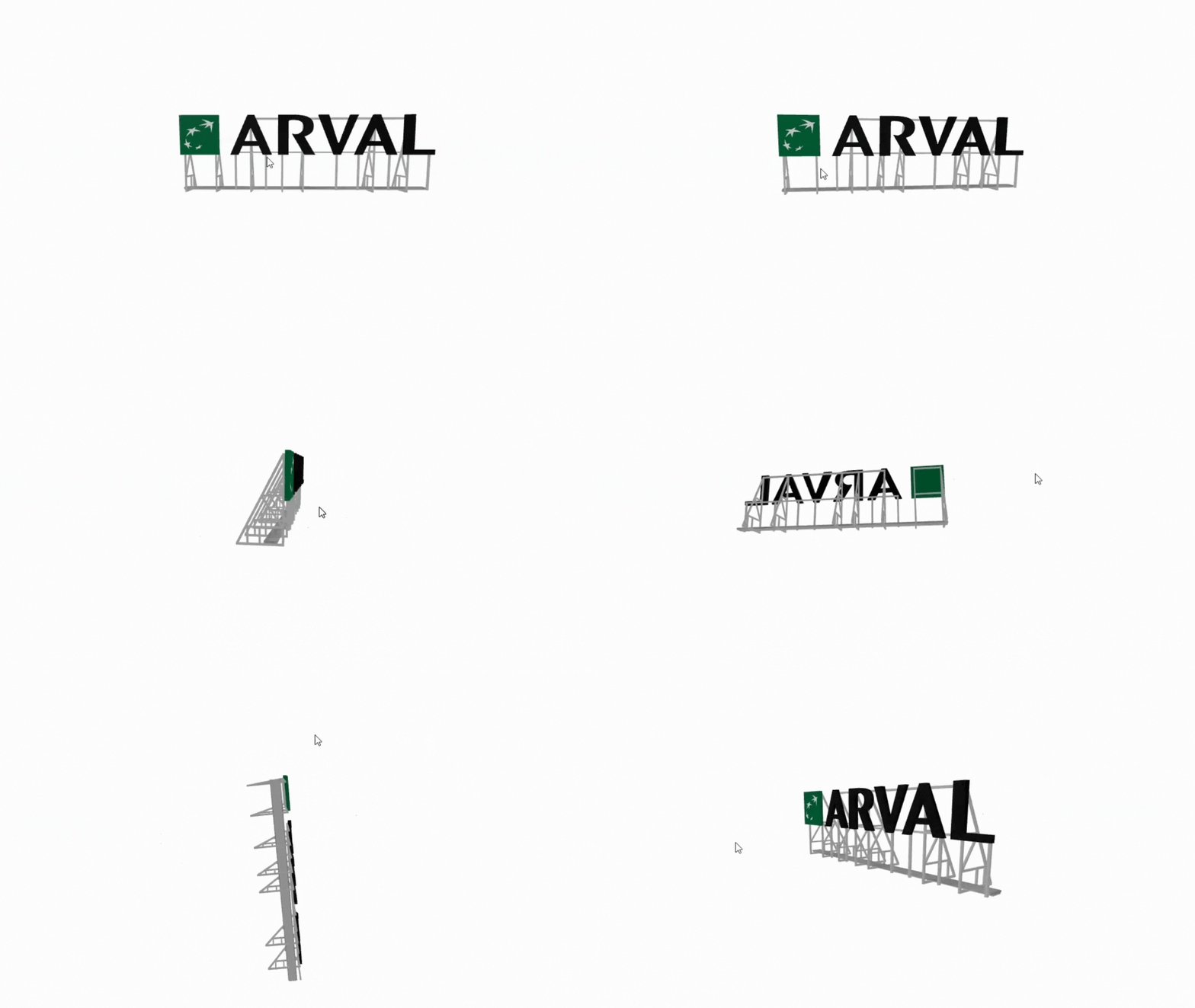
The incorporation of the artificial intelligence (AI) The world of signage is transforming not only design, but also the way a brand is visually communicated. First, AI allows you to generate multiple versions of a sign immediately, experiment with fonts, colors, and visual structures, and see how each of them adapts to the customer's physical environment.
In addition to static designs, AI is also applied in the creation of animated simulations and videos that show how a sign is built or installed. This type of content not only makes it easier for the client to understand the project, but also adds an emotional charge to the process: Seeing how your graphic identity is built in real-time builds trust and bonding .
But the scope of AI goes beyond design. In commercial settings such as restaurants, stores, or hotel chains, it is used to generate Dynamic content on digital screens : animated offers, products on promotion, updated prices and personalized audiovisual pieces. This Digital signage technology It turns each screen into a communication tool consistent with the brand's visual identity.
For the customer, this combination of capabilities means more control, more clarity, and a richer, more up-to-date, and consistent visual experience. AI allows each visual message to be optimized, synchronized with the style of the business and adapted to the environment precisely.
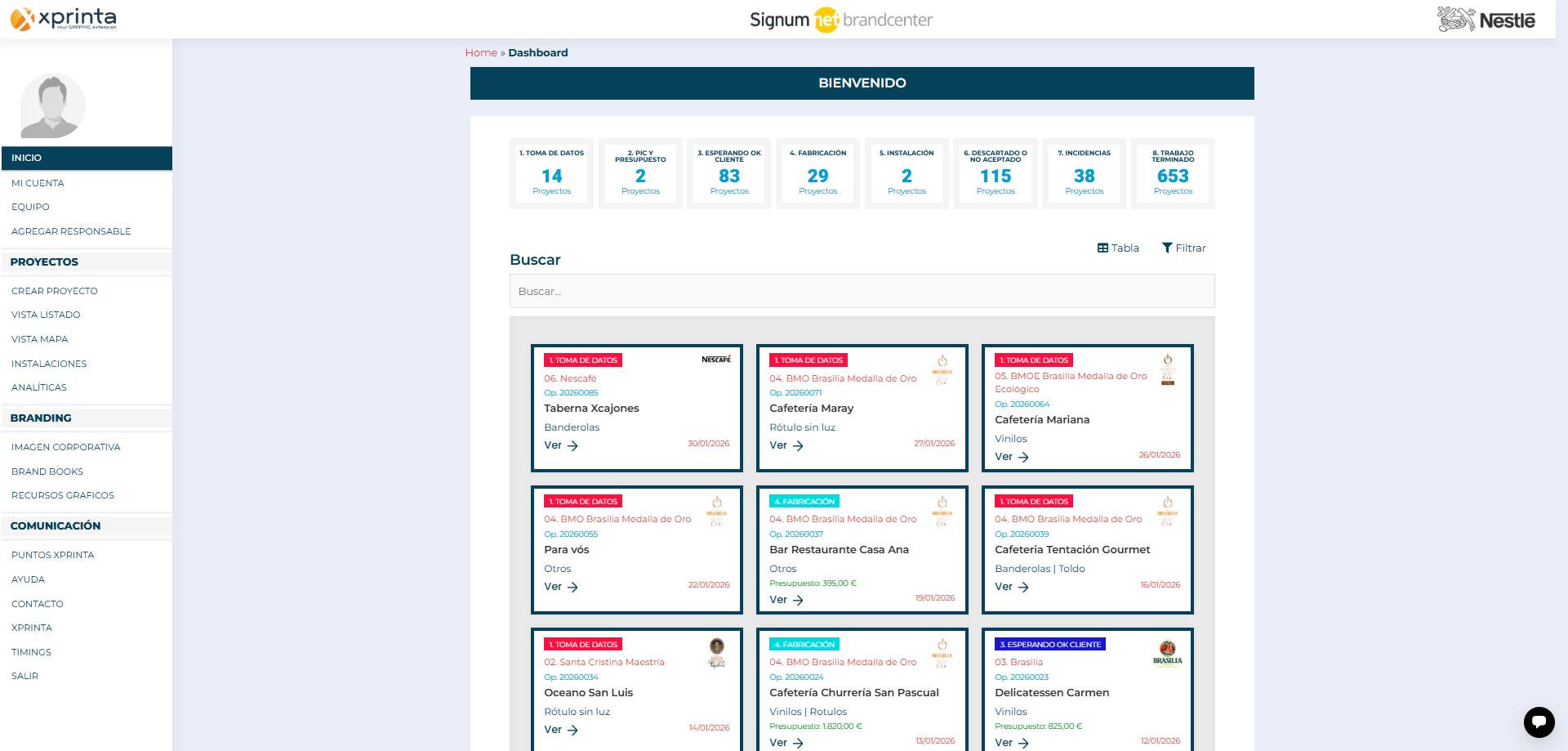
One of the great advances of the Signage technology it is the possibility of managing the entire project from a centralized digital environment, such as a Brand Center. In it, the customer can consult at any time:
This level of organization allows Full traceability of the process , which is particularly valuable in large-scale projects or national deployments. In addition, it avoids errors, unnecessary repetitions and misunderstandings between departments or headquarters.
For the customer, the main value is the Sense of control and transparency . Knowing where your project stands, being able to review past decisions, and having a single space for everything reinforces the company's perceived confidence and professionalism.
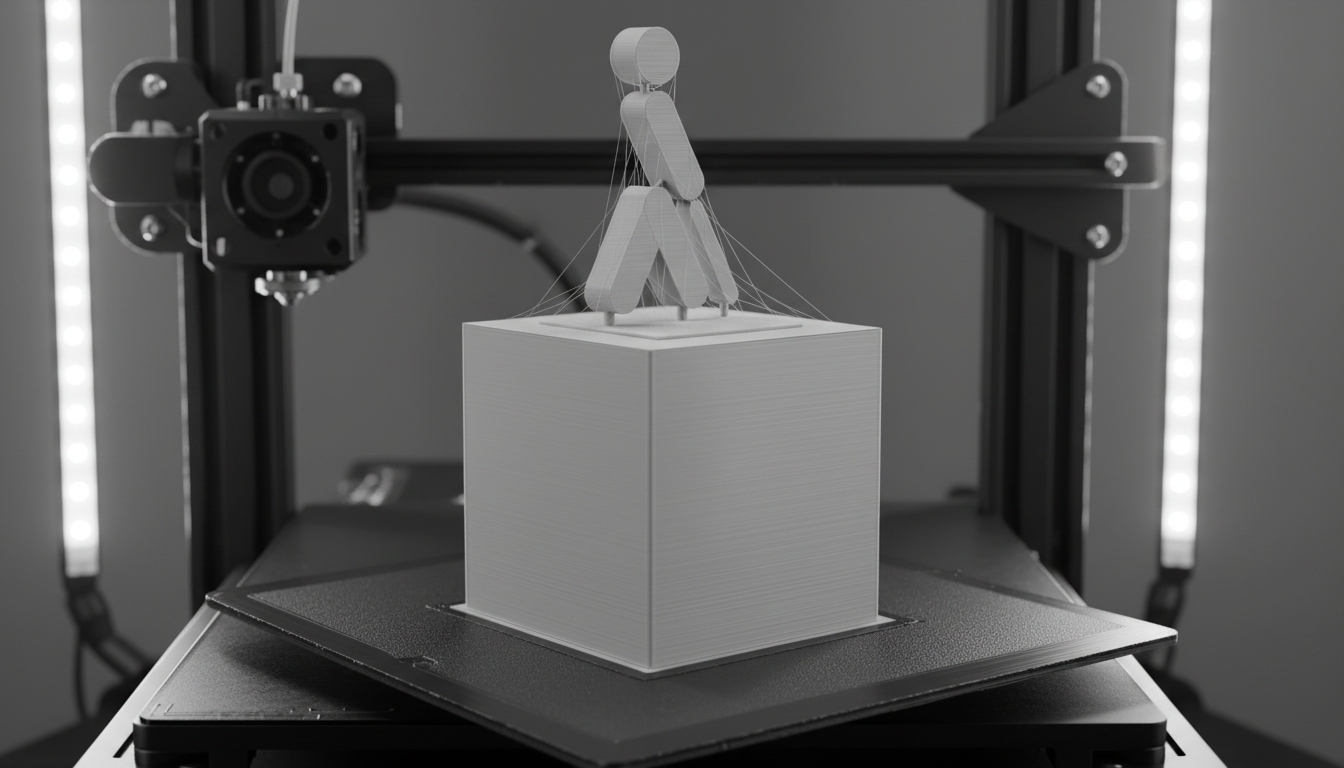
Although digital design has come a long way, nothing replaces the experience of touching and seeing a real object. For this reason, the 3D printing It has become a key tool for sign prototyping.
Thanks to it, it is possible to manufacture real samples to scale or in full size that show the volumes, materials, finishes and technical details of the label. This allows the customer to Make informed decisions , avoid surprises and adjust aesthetic or structural aspects before mass production.
From an emotional perspective, receiving a physical prototype reinforces the bond with the brand and transmits a high level of commitment and professionalism . In addition, it improves communication between customer, designer and installer.
Installing signs in different locations or franchises requires precise coordination. The Mobile Data Collection Apps have solved many of the bottlenecks in this process.
Now, field teams can:
This connectivity ensures that everyone involved – customer, designer, installer – works with the same up-to-date information. In addition, it reduces errors, improves efficiency, and enables Real-time monitoring of project progress .
The customer thus perceives an agile, connected and professional company, capable of resolving unforeseen events without misalignments.
Traditional signage has evolved into smart formats that not only inform, but also interact and extend the user experience . One of the most used resources are QR codes, but not as isolated elements, but as Access doors to digital platforms developed specifically for each project.
This intelligent signage allows a physical medium – such as a plate or a totem – to connect the user with a APP-like digital interface , accessible from your mobile. On this platform you can access:
This approach turns signage into A comprehensive and adaptive experience , ideal for tourist, cultural, institutional or educational environments. The Signage technology applied to signage, it allows each information point not only to communicate a message, but also to be integrated into a larger system of identity, narrative and accessibility.
For the client – be it a town hall, a foundation or a chain of spaces – this represents a way of Increase the value of your facilities , differentiate through innovation, and deliver a rich, memorable, and easily upgradable experience.

Signage has undergone a profound transformation thanks to the integration of technologies such as augmented reality the artificial intelligence the 3D printing and the Digital Management Platforms . These tools allow you to visualize results before producing them, make decisions with more confidence, reduce errors and centralize the management of each project. The result is a more efficient, controlled, and satisfying experience for both customers and brands.
A clear example of this evolution is Xprinta , whose technological implementation shows that this is the right path for the sector. By applying these solutions in projects for brands such as Ilunion , Petronas , Nestlé and many others, Xprinta guarantees coherent, predictable signage aligned with the customer's visual identity, providing transparency, agility and real value at every stage.