
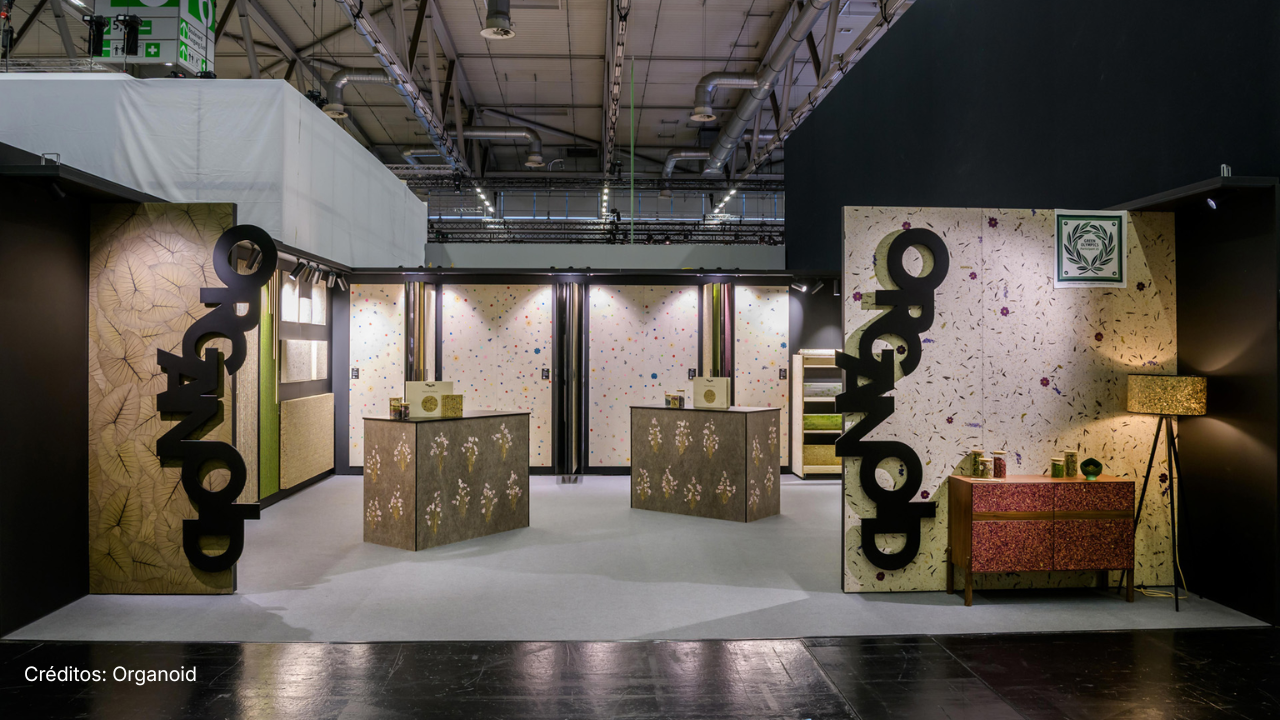
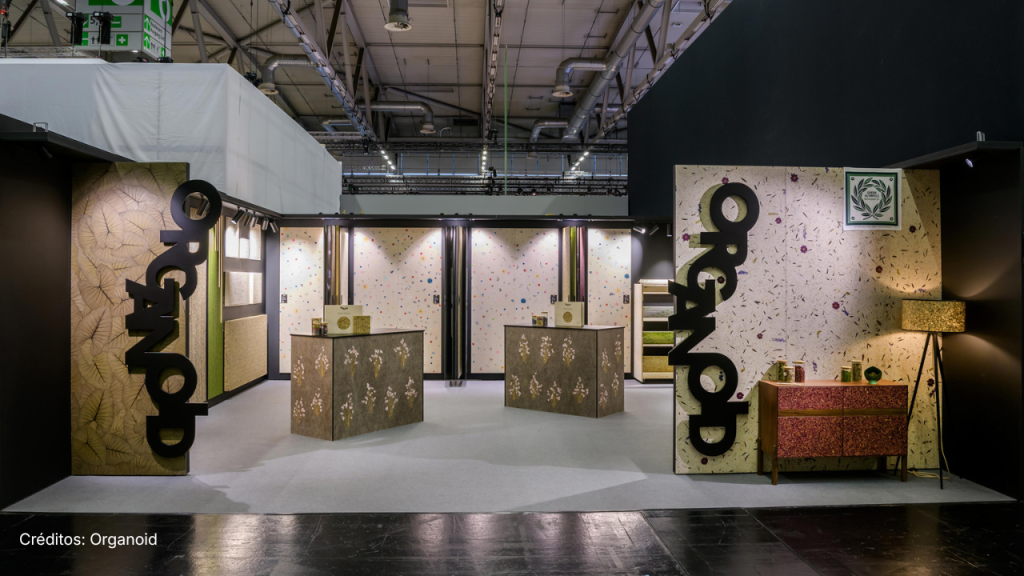
In the Interior Design and Architectural Signage , the experience that a space transmits is becoming more and more important. Not just how it looks, but how it feels. In this context, Avery Dennison proposes a solution that goes beyond the visual with Organoid Natural Surfaces , a range of decorative surfaces made from Real Natural Materials . A product designed for projects that seek authenticity, differentiation and a direct connection with nature within interior spaces.
Organoid Natural Surfaces is a collection of decorative surfaces designed for Interior design and architectural signage projects . The product is manufactured with Natural Raw Materials (e.g. plant fibres, flowers, leaves or other organic components depending on the finish), integrated into the sheet itself to create a result with real texture.
This allows the finish to be clearly perceived both to the eye and to the touch, with an organic appearance that brings warmth to the space. The idea is simple: use a decorative material that has presence, that is noticeable up close, and that provides a natural style without depending on repetitive patterns. It is a product where the material itself is already part of the message of the space.
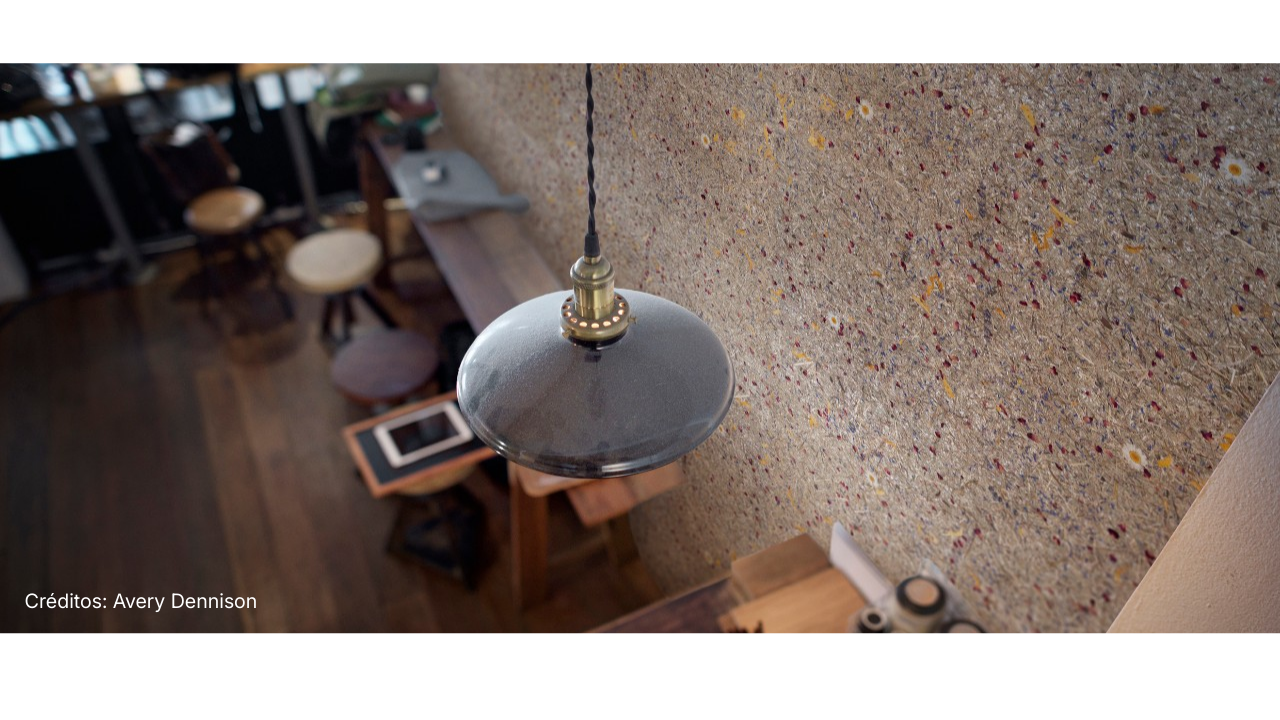
The sensory experience is one of the aspects that most differentiates Organoid Natural Surfaces compared to other decorative surfaces for interiors. The texture of the material is immediately perceptible, both to the eye and to the touch, adding depth to walls and panels that might otherwise be flat or neutral. This texture helps the space to have More presence without the need to add volume, additional furniture or complex graphic resources.
In addition, in certain finishes, Organoid retains the natural smell of the materials from which it is made . This detail, unusual in decorative surfaces, directly influences the perception of space . It is not an artificial or intense smell, but a natural note that accompanies the environment and contributes to making the space feel more pleasant and close. Indoors where the time spent is important – such as shops, offices, waiting areas or hospitality spaces – this type of sensation they influence how the place is experienced and the impression it leaves.
From the point of view of design, this sensory dimension allows the space to be worked on in a more complete way. Not only is what is seen designed, but also what is perceived when being within the environment. This is especially interesting in projects where the aim is to convey calm, well-being or a more natural connection with the environment , without resorting to explicit speeches or overloaded decorative elements. The material acts as an active background that accompanies the space and constantly reinforces its identity.
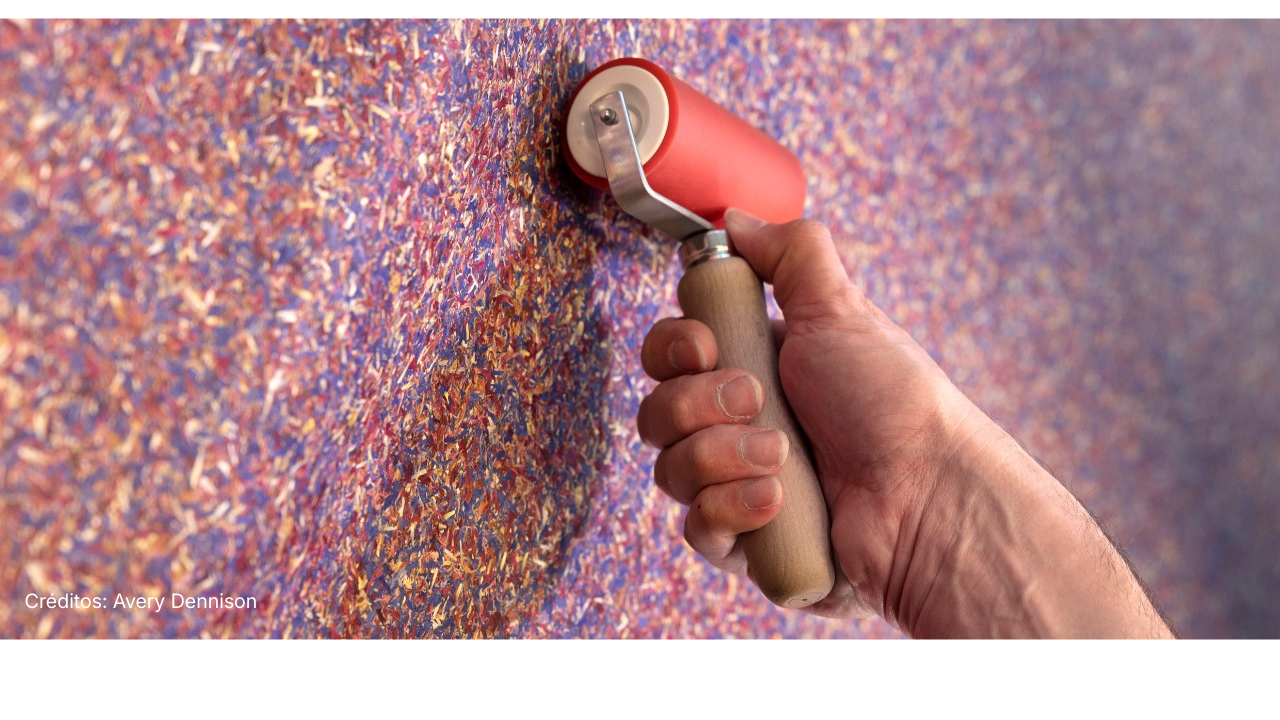
Organoid is used in projects where the objective is Transform a space by providing texture and personality. It works well on reception walls, passageways, product corners, meeting rooms, counters, dividers, decorative panels and other interior surfaces where the material can shine.
Used to create Areas with their own identity such as interior showcase backgrounds, experience areas, corners without excess graphics, or spaces where you want to highlight a product or a category. In offices and corporate environments it can provide a More human and warm tone , especially at entrances, rest areas or visiting areas. As there are opaque and translucent options, light can also be worked with when applied to surfaces where there is natural or artificial lighting that passes through or accompanies the material.
In many current projects, the aim is for the materials to have Consistency with sustainability and responsible design criteria . Organoid It fits in with this line because it incorporates natural raw materials and proposes an interesting alternative for interior applications that want to move away from more conventional materials.
This type of surface lends itself to projects where the sustainability it is a decision applied to the corporate space that it wants to reflect Commitment to materials closer to organic . In addition, this approach often helps the design to feel less cold and more pleasant, something that impacts the experience of those who enter the space.
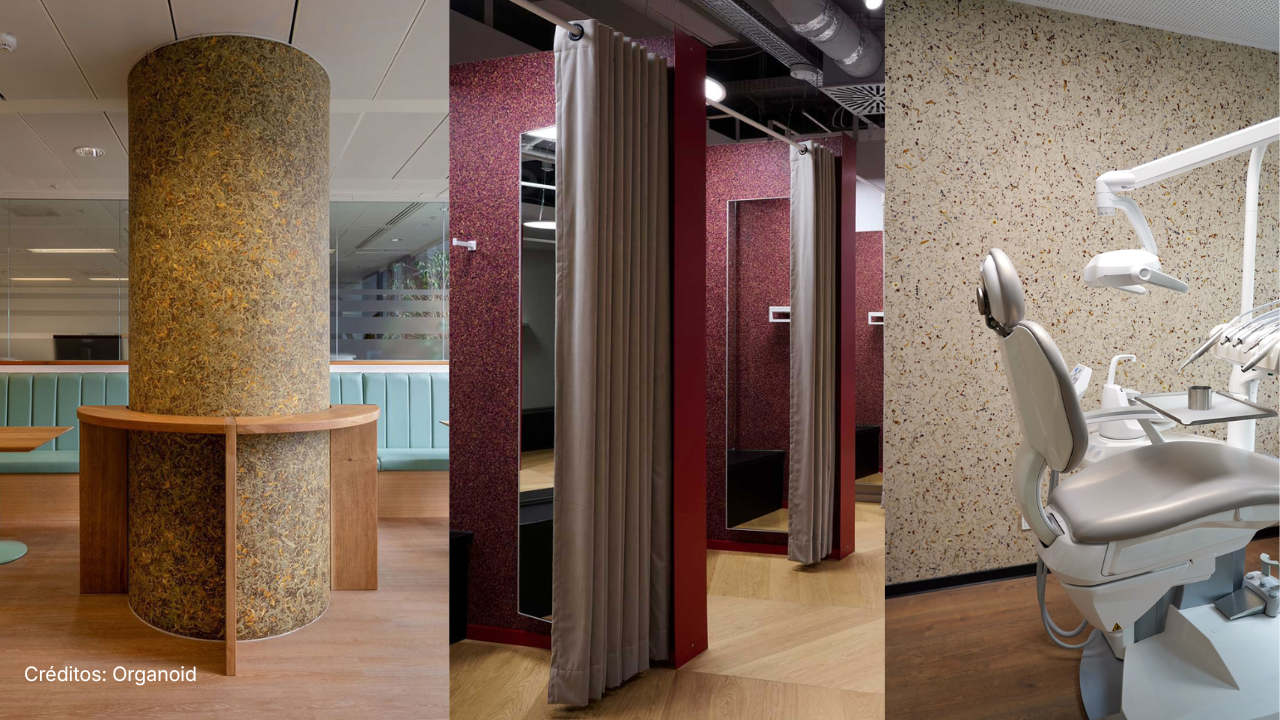
Organoid is chosen by a combination of aesthetics, sensoriality and viability in interior projects. Here are some of the most relevant features and solutions:
These features help to make clear project decisions about where to use it, what it brings to the table and what type of spaces benefit most from its use.
Organoid Natural Surfaces It is proposed as an interesting solution for interior design projects that seek to introduce materials with presence, texture and more natural within the space. Its use allows the design to be worked from the material itself, adding value without the need to resort to complex graphic resources or heavy construction interventions. It's a product that fits well in environments where space needs to be Communicate sensations such as calm, closeness or brand identity in a direct and coherent way.
The possibility of applying it in different contexts – retail, hospitality, offices or corporate spaces – and on specific surfaces makes it a Flexible tool for designers, architects and installers. In addition, its focus on natural materials and its practical implementation indoors respond to an increasingly common way of designing, where both the visual result and the experience generated by the space are valued. Organoid does not pretend to be the absolute protagonist of the design, but a an effective resource for building environments with character and meaning.