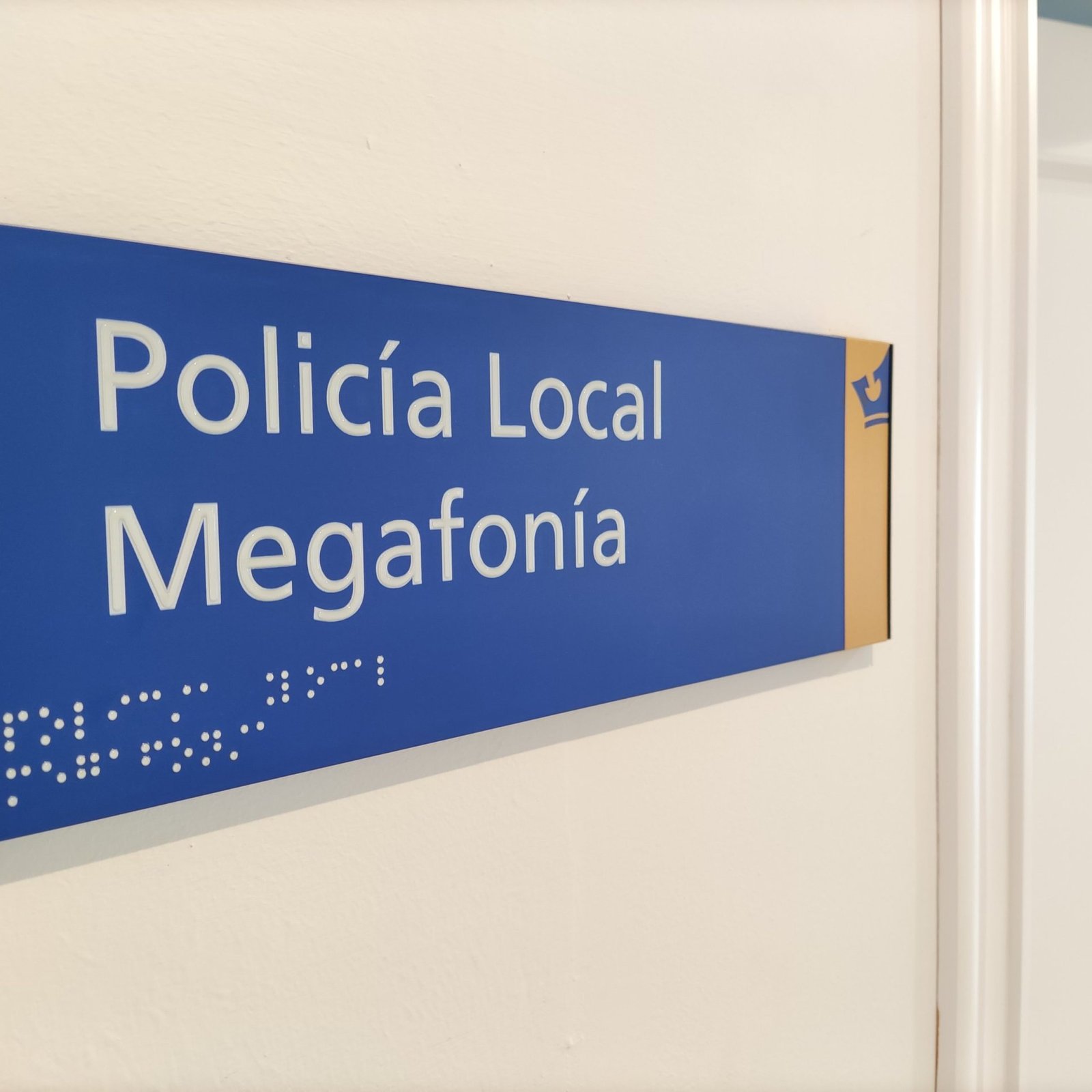
When we talk about accessible signage, the first thing that usually comes to mind is braille plates. However, accessibility in spaces goes much further. Color contrasts, pictograms, tactile elements, and orientation systems are part of a set of solutions designed to make it easier for different people to understand and use an environment.
For signage companies, knowing these solutions is not just a matter of design or regulatory compliance. It also means the possibility of expanding their services and participating in projects that require specialized knowledge.
And the fact is that not having the necessary means to manufacture certain elements does not have to mean giving up a job.
One of the most common mistakes when talking about accessible signage is relating it exclusively to blind people. Although braille is an important tool, visual accessibility must also consider the needs of those with low vision, difficulties in distinguishing certain elements, or problems orienting themselves in unknown spaces.
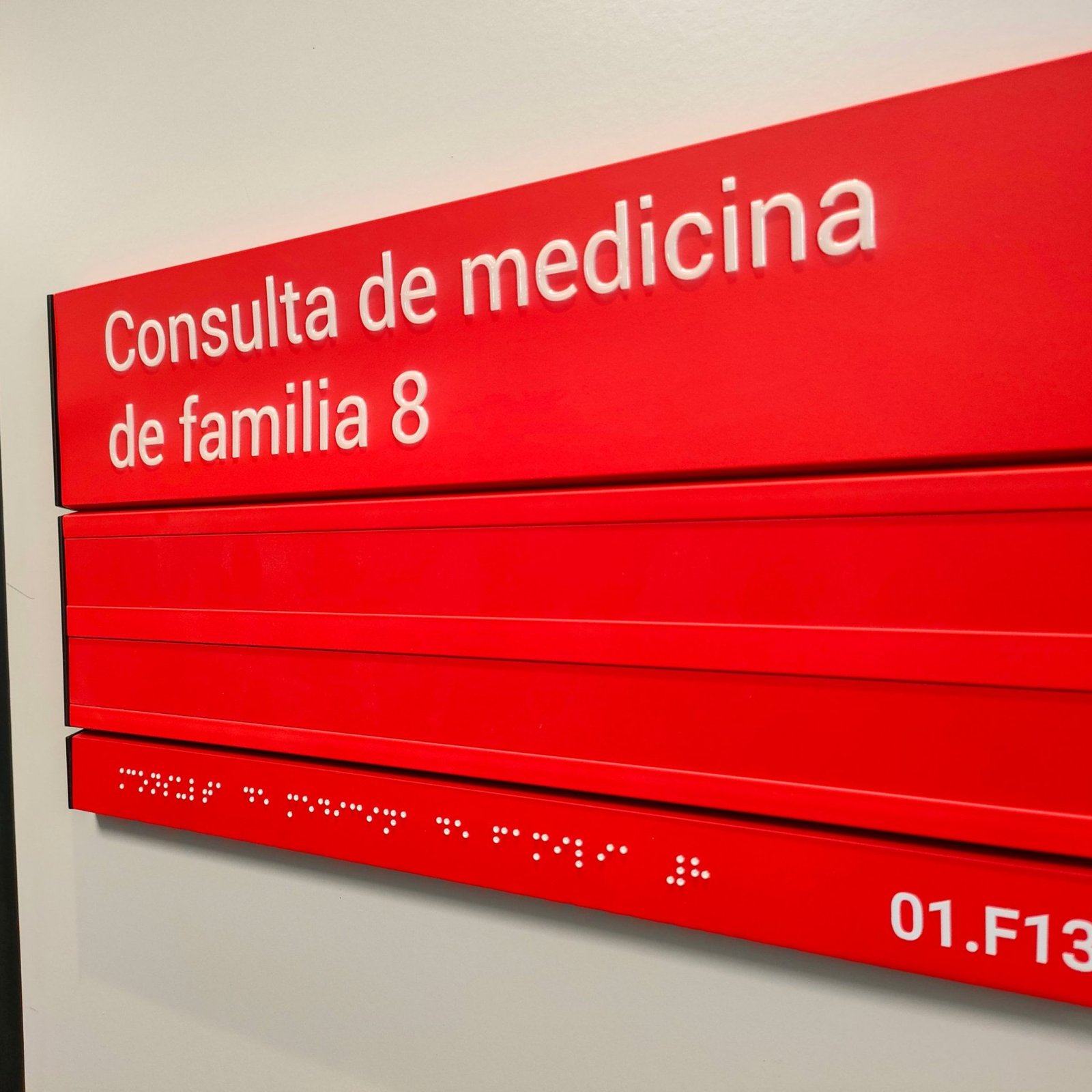
For this reason, an accessible sign can incorporate different resources: appropriately sized letters, contrast between text and background, recognizable pictograms, raised characters, or tactile information. The combination of these solutions depends on the environment, the function of each sign, and the needs of its users.
Accessibility is also not limited to visual impairment. Clear and understandable signage can facilitate orientation for elderly people, visitors who are unfamiliar with a building, or users who need to quickly identify a route.
Accessible signage requires paying attention to aspects that may go unnoticed in a conventional signage project. It is not enough for a sign to be attractive or maintain a brand's visual identity: it must also convey information in a comprehensible way and be located where it can be used.
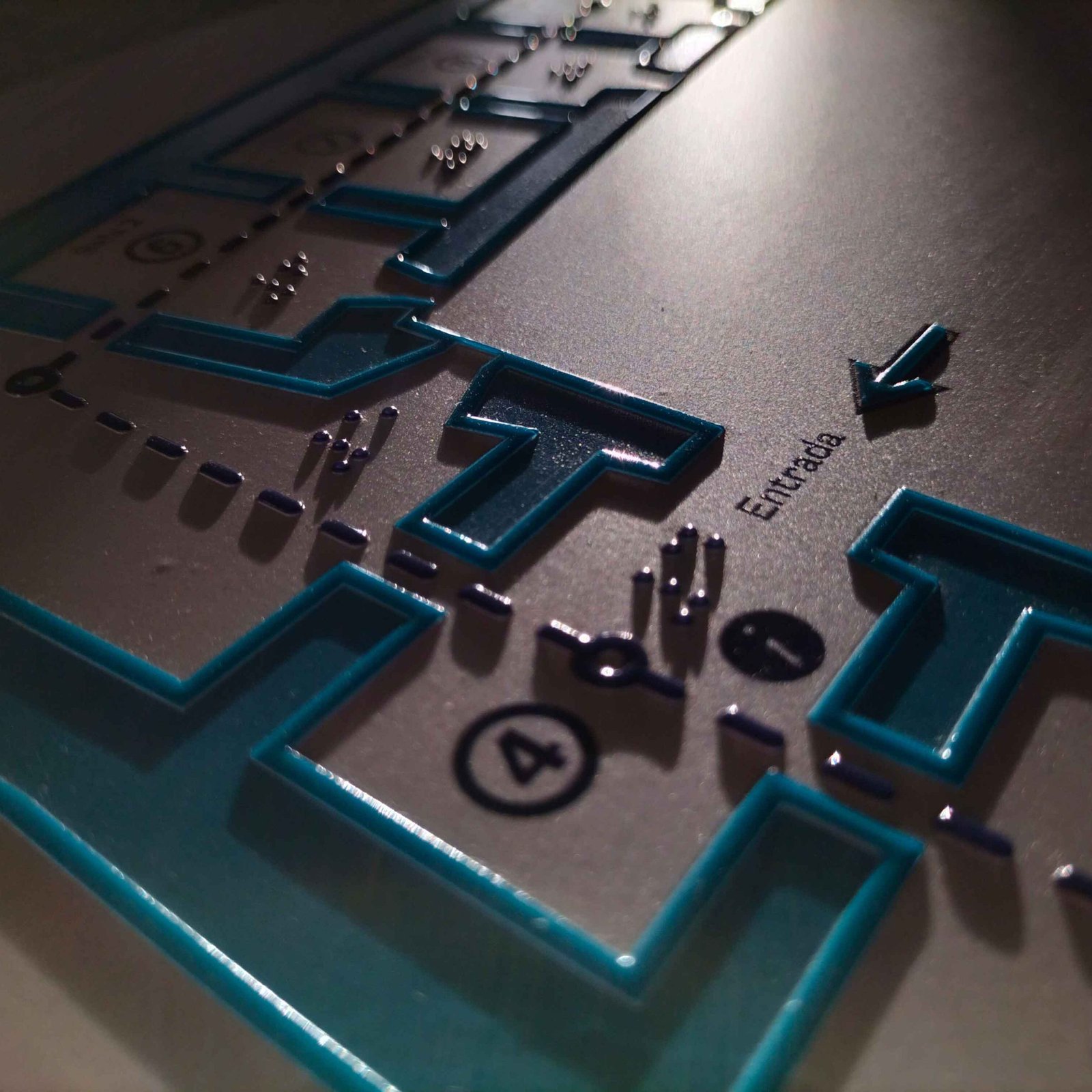
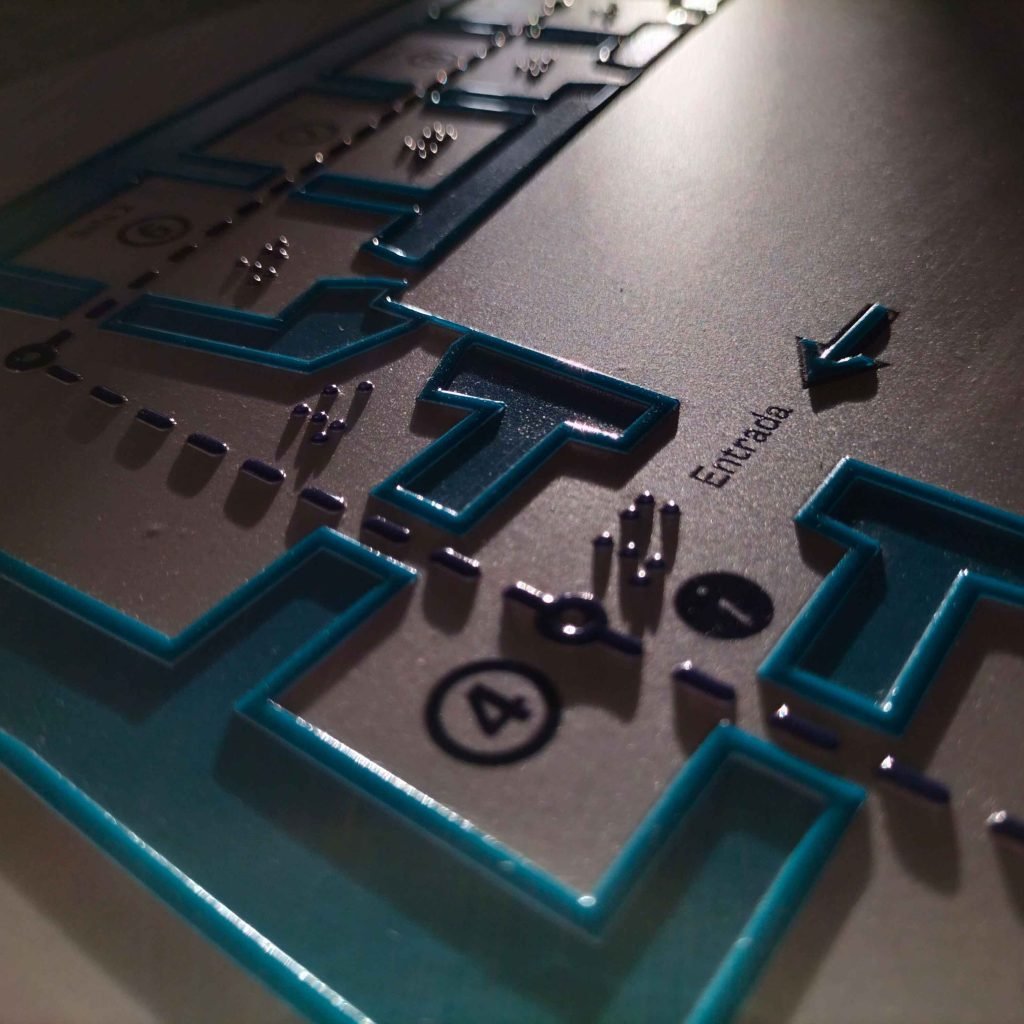
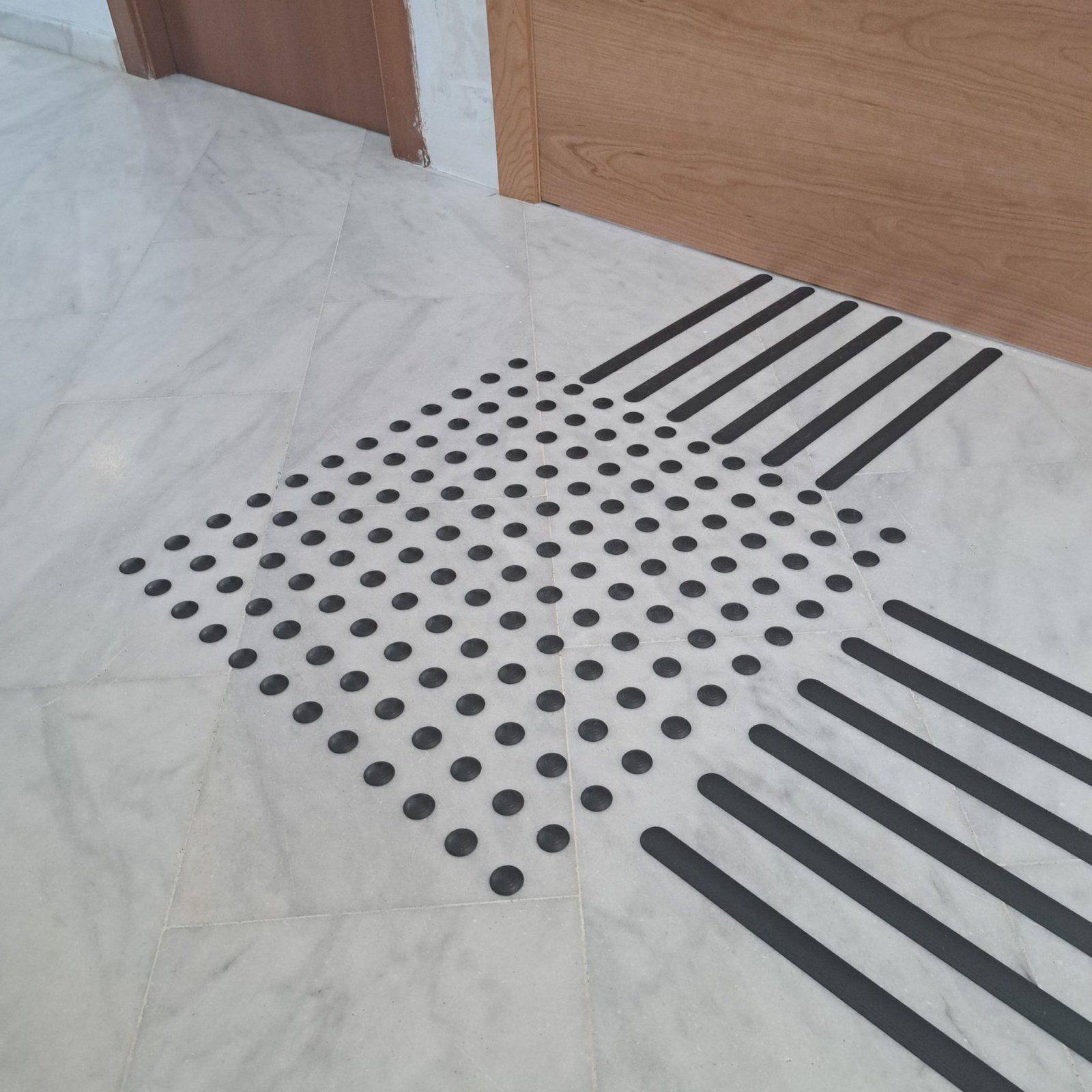
Among the solutions that can be involved in a project are braille and high-relief signage, haptic maps that allow a space to be recognized through touch, tactile paving that provides information during movement, or directories designed with legibility and contrast criteria.
In addition, the location, installation height, lighting, and materials used can influence the effectiveness of the whole. Each solution must respond to specific needs and applicable technical requirements, so adding braille to a conventional plate does not, by itself, guarantee that it is accessible.
Hospitals, educational centers, administrative buildings, offices, hotels, and commercial establishments are some of the spaces where accessible signage solutions may be needed.
In many cases, these needs arise within broader projects. A company may be commissioned to renovate a building's image, install new directories, or signpost different areas and find that part of the work requires incorporating accessibility elements.
Regulations also play an important role. In Spain, there are accessibility requirements that affect certain buildings and spaces, although the specific obligations depend on the type of action, the use of the property, and the applicable regulation.
For signage professionals, this means that accessibility should not necessarily be viewed as an isolated service. It can be part of the work they already regularly perform for their clients.
Let's imagine a signage company receives an order to sign an office building. The project includes vinyls, identification plates, directories, and various corporate elements. So far, everything falls within their usual activity.
However, the client also needs braille plates, haptic maps, and tactile orientation solutions. The workshop does not have the necessary equipment to manufacture them, nor does it have sufficient experience to determine their technical characteristics.
Faced with this situation, giving up that part of the project is not the only alternative. Collaborating with specialized companies can allow incorporating those solutions into the work and offering the client a more complete proposal.
This way of working is not foreign to the visual communication sector, where collaboration between manufacturers, installers, and specialists allows for tackling projects with different technical needs. Accessible signage is another area where this model can be especially useful.
For a signage company, expanding its offering does not always imply buying machinery, incorporating new production processes, or internally training its entire team in a specialty.
In certain projects, having collaborators who master a technology or a type of manufacturing allows for responding to needs that would otherwise be beyond their capabilities.
In the case of accessible signage, this collaboration can help offer complementary solutions, participate in more complete signage projects, and maintain relationships with clients who require different types of elements.
That does not mean that any workshop can automatically take on any order. It is important to know the scope of the work, identify the applicable requirements, and have professionals capable of developing and verifying the necessary solutions.
The opportunity lies in knowing how to detect these needs and having the appropriate resources to respond to them.
An example of this specialization is Polaris Sign, a company focused on accessible signage solutions that works both for end clients in the public and private sectors and in collaboration with signage professionals.
Its activity includes solutions such as braille and high-relief signage, haptic maps, and other elements intended to facilitate orientation and access to information in different spaces.
This collaboration model allows a signage company to consider projects that incorporate accessibility needs without having to develop all the specialized processes internally.
We talked precisely about this issue in a new episode of the Signolia podcast with Miguel Ángel Ramos, from Polaris Sign. During the conversation, we addressed the importance of understanding accessibility beyond total blindness, the needs that arise in signage projects, and the role of specialized companies as collaborators for other professionals in the sector.
Accessible signage is a field of visual communication that combines design, functionality, technical knowledge, and attention to people's needs.
For signage companies, understanding their applications allows them to identify new possibilities within the projects they are already developing. And when a commission requires solutions that fall outside their specialty, collaborating with experienced professionals can be an alternative to turning down the work.
The key is not to manufacture absolutely everything, but to know how to offer the right solution and rely on those who can make it possible.
Listen to the new episode of the Signolia podcast with Miguel Ángel Ramos, from Polaris Sign, and discover how accessible signage can open up new possibilities for professionals in the sector.